
Diyas create the unmistakable warmth of Diwali, but walls shape how a room feels before the lamps are lit and after they are cleared away. Good diwali wall decoration ideas use art, light, flowers and colour as a connected composition. They do not require covering every surface or buying a complete new set of décor for one week.
A devotional frame can establish a culturally meaningful focal point. Botanical, autumn or abstract art can carry festive colour into a living room without being tied to a ritual space. A planned gallery grouping can bring the two together when the household enjoys both. The choice depends on room function, existing furniture and family preference.
This guide is décor-led rather than a shopping list. It explains how to assess a wall, build a palette, combine temporary decorations with year-round framed art and keep lights and diyas safely arranged.
Choose the wall before choosing the decoration
Walk through the home and identify the wall guests naturally see: above a console, behind the sofa, beside the dining area or near the entrance. One intentional festive wall usually has more impact than small unrelated additions in every room. Check the view during daytime and evening lighting.
Measure the usable area, including furniture below and switches beside it. Mark frame dimensions with paper or painter's tape. Leave enough distance above a sofa or cabinet so artwork feels connected rather than floating, and ensure doors or curtains will not strike it.
The entrance can welcome guests with a compact frame, toran and flowers. The living room can support a wider three-piece arrangement. A pooja wall should prioritise devotional use and flame safety over decorative density.
Build a festive colour palette from existing art
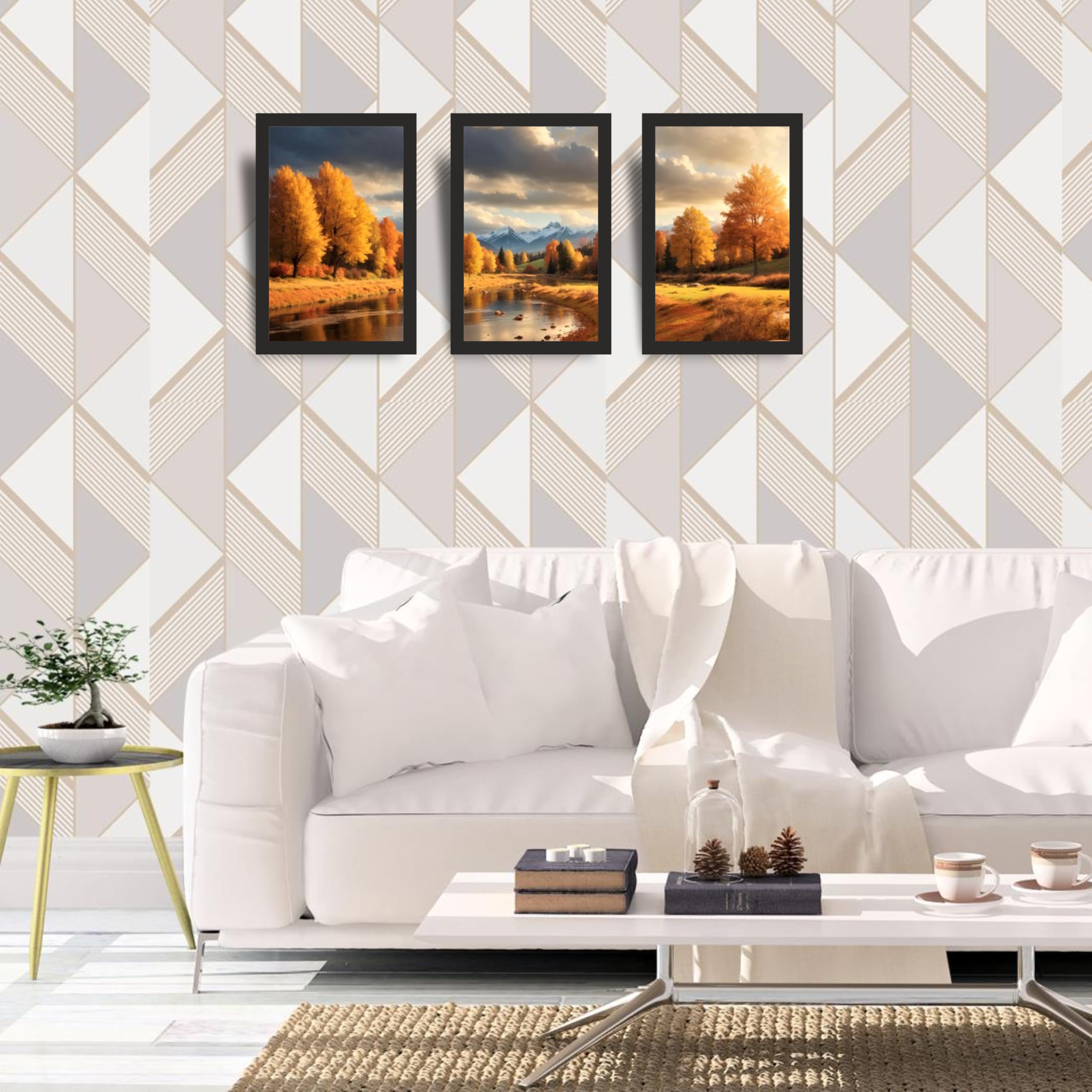
Instead of choosing colours from a trend board, begin with what is already on the wall. Pull two or three tones from the artwork into cushions, flowers, rangoli or fabric. Warm orange, red and gold can echo devotional imagery; green, cream and terracotta can work with botanical art; amber and rust complement autumn landscapes.
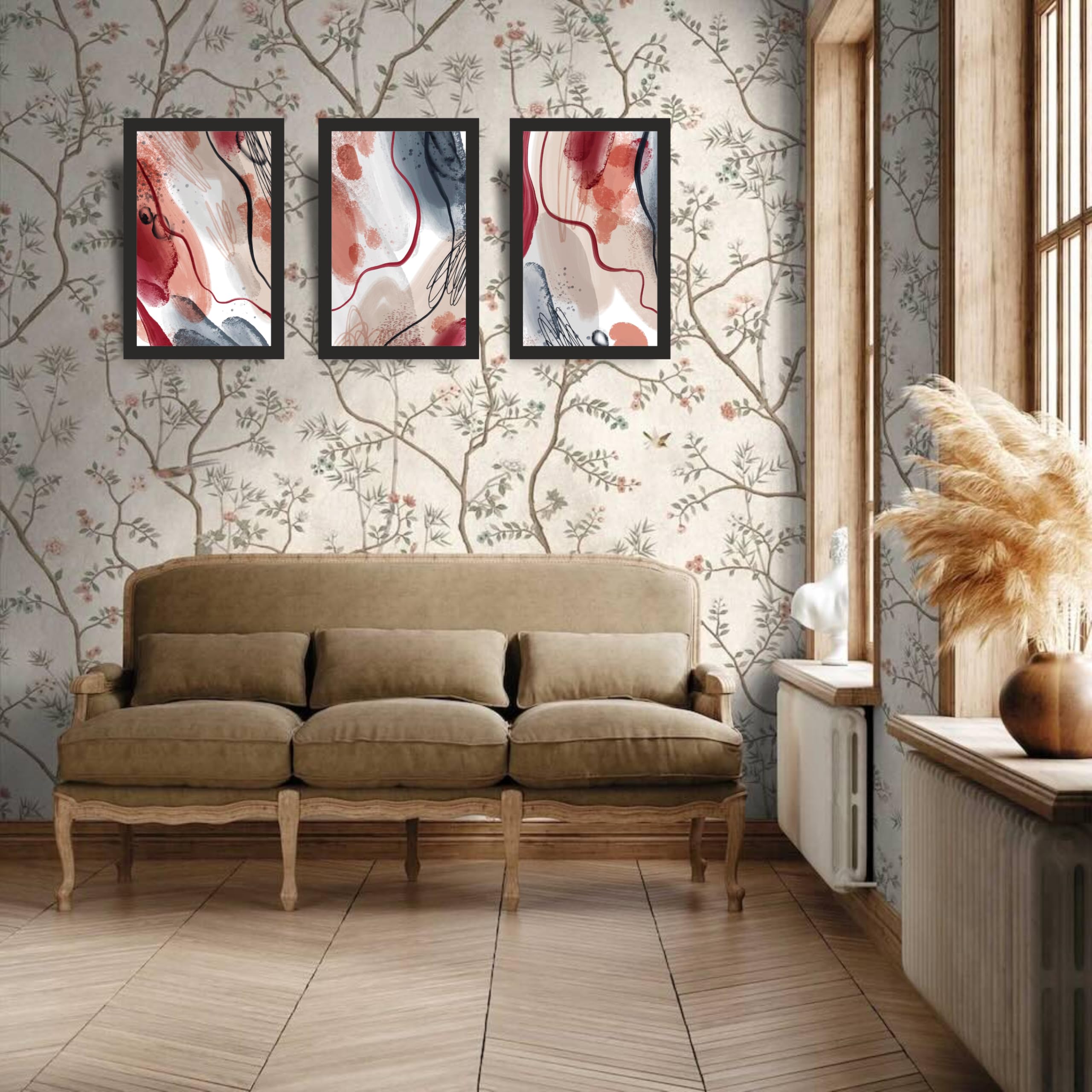
A neutral abstract set creates space for brighter marigolds and lamps. Colourful floral art may need simpler garlands so the wall does not become visually noisy. Repeat the same metal finish—brass, copper or matte gold—in small accents to give separate elements a relationship.
Limit the palette rather than matching every object perfectly. Natural variation in flowers and handmade decoration adds warmth; consistency comes from repeating a few colours and materials.
Devotional wall art for Diwali
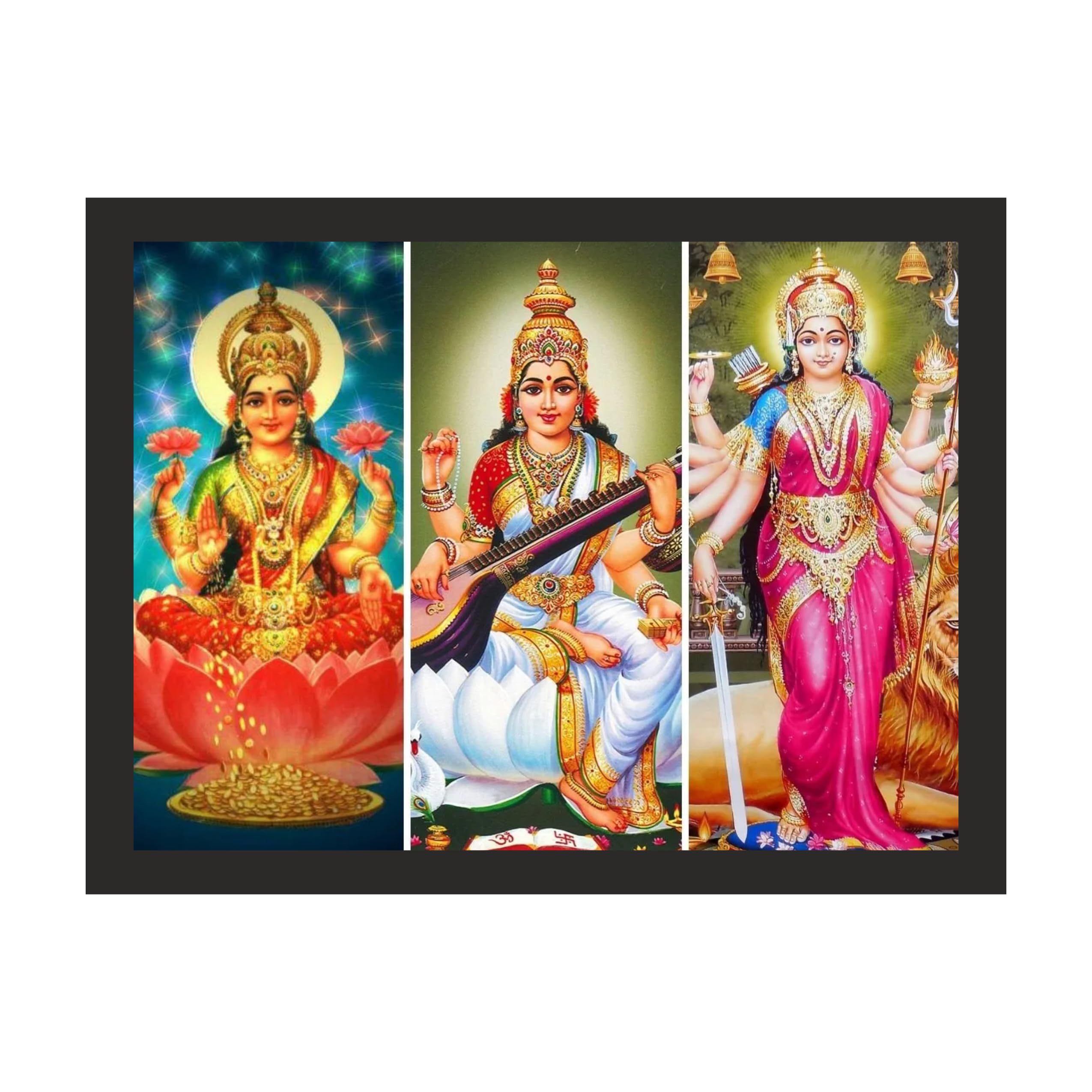
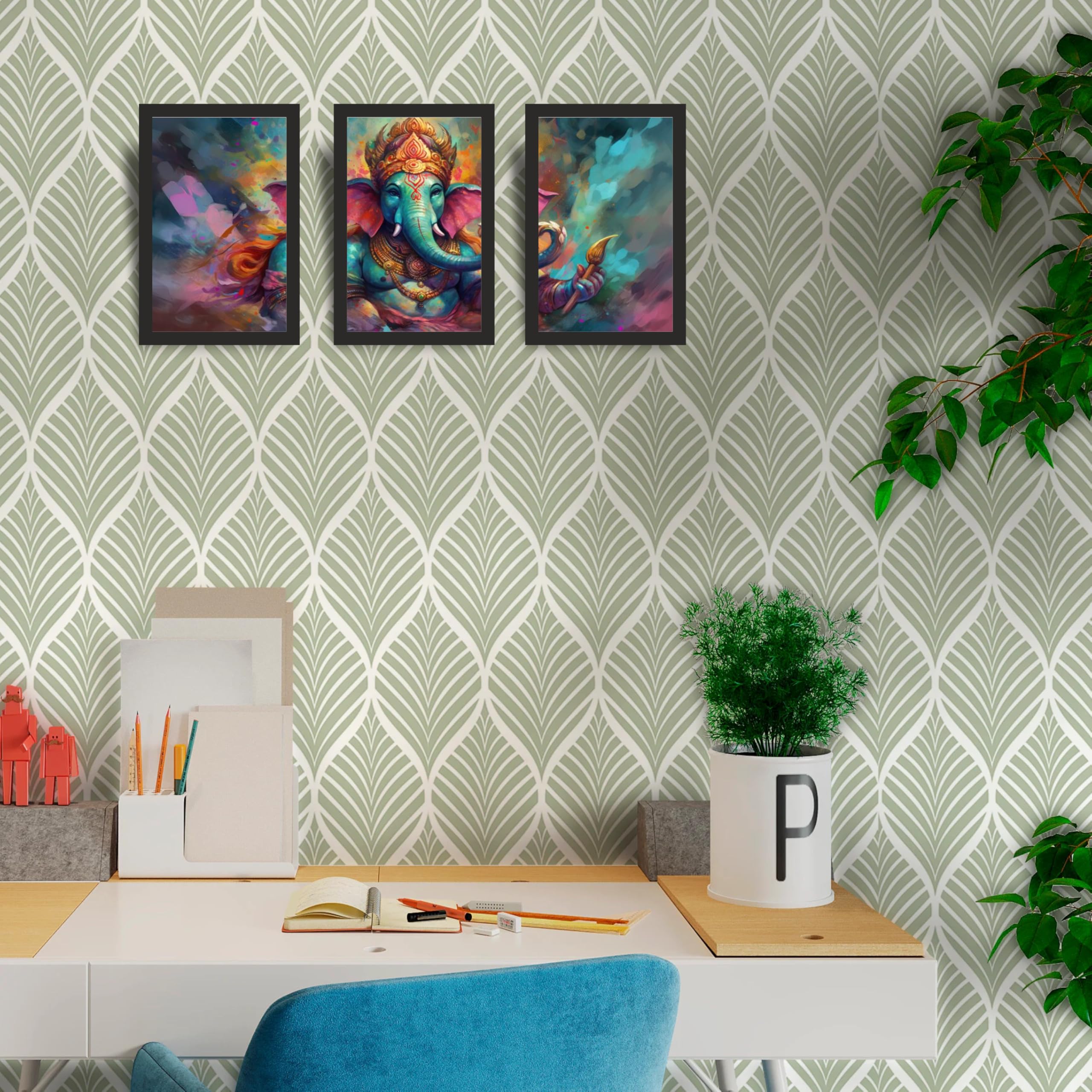
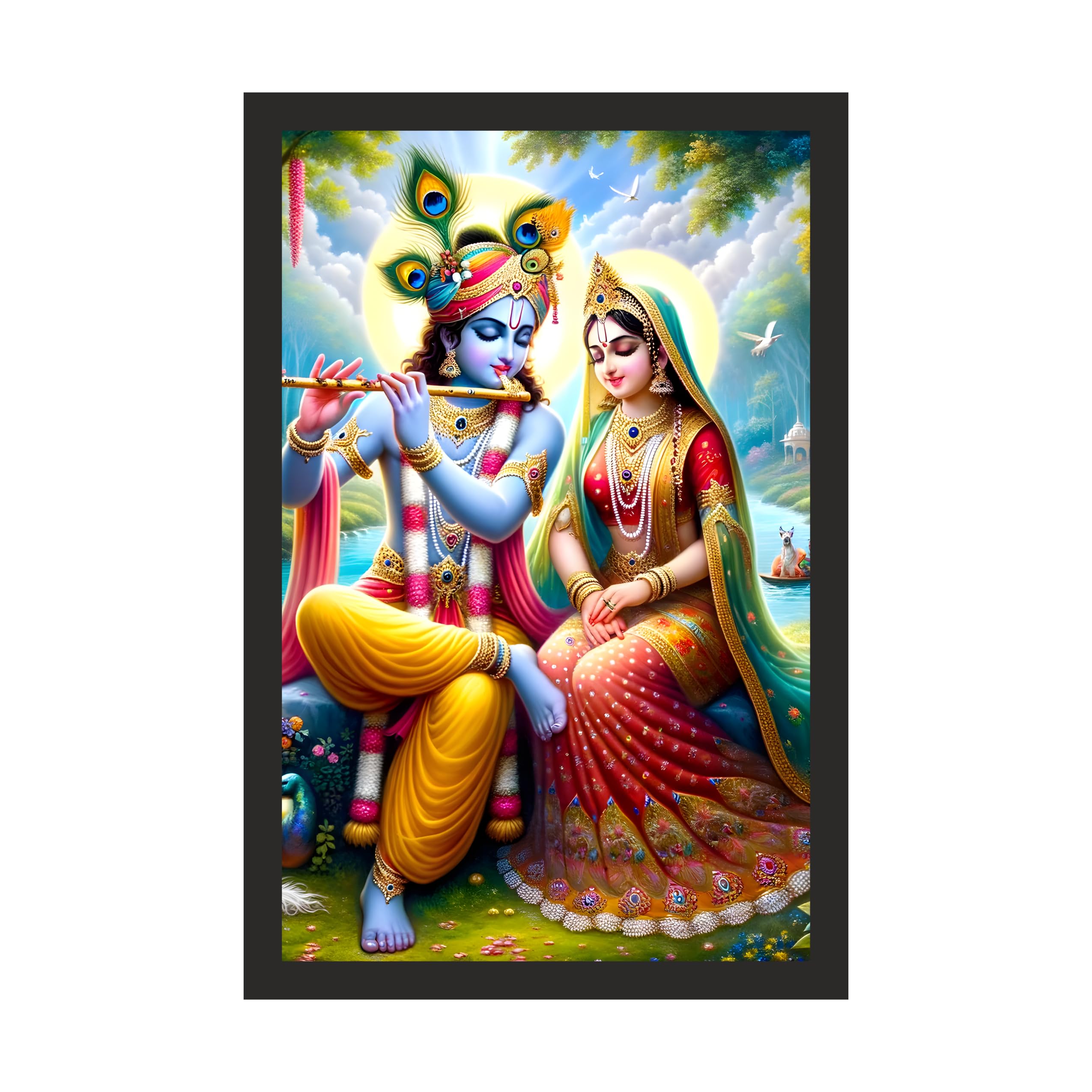
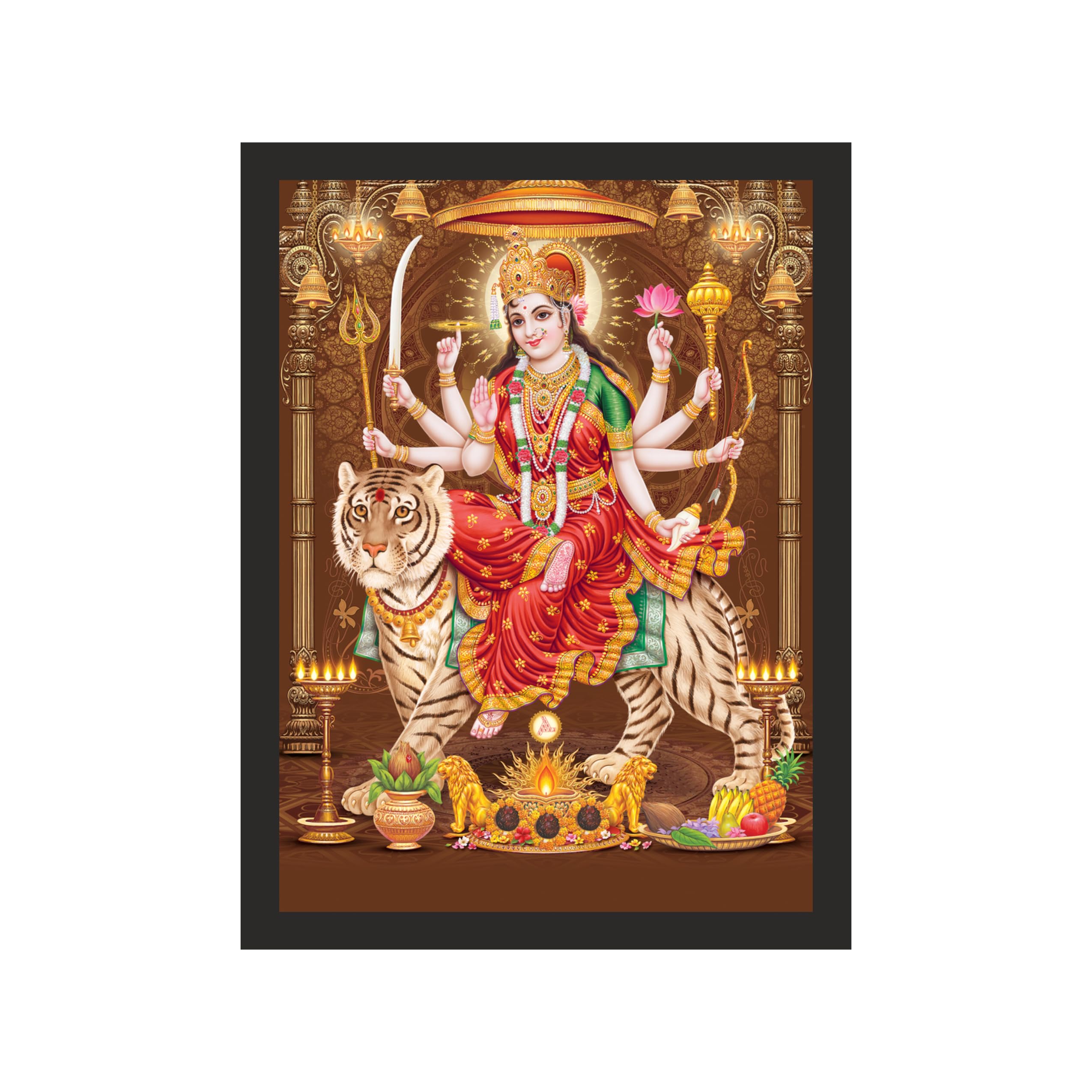
For families who display devotional imagery, Ganesh, Tridevi, Durga, Ram or Radha-Krishna frames can serve as a central visual element. Select the subject according to household practice, not a generic claim about what every Diwali wall must contain. The artwork should remain meaningful after the festival.
Compact 9×12 frames fit an entrance console or pooja grouping. A large Radha-Krishna piece can anchor an open living-room wall. A colourful Ganesh set can create width above a cabinet. Keep garlands around, not across, important image details and protect prints from flower moisture.
For gifting these subjects rather than decorating your own home, see spiritual Diwali gift ideas. For Durga-specific symbolism and placement, use the Durga Maa photo frame guide.
Use nature and abstract art for a festive living room
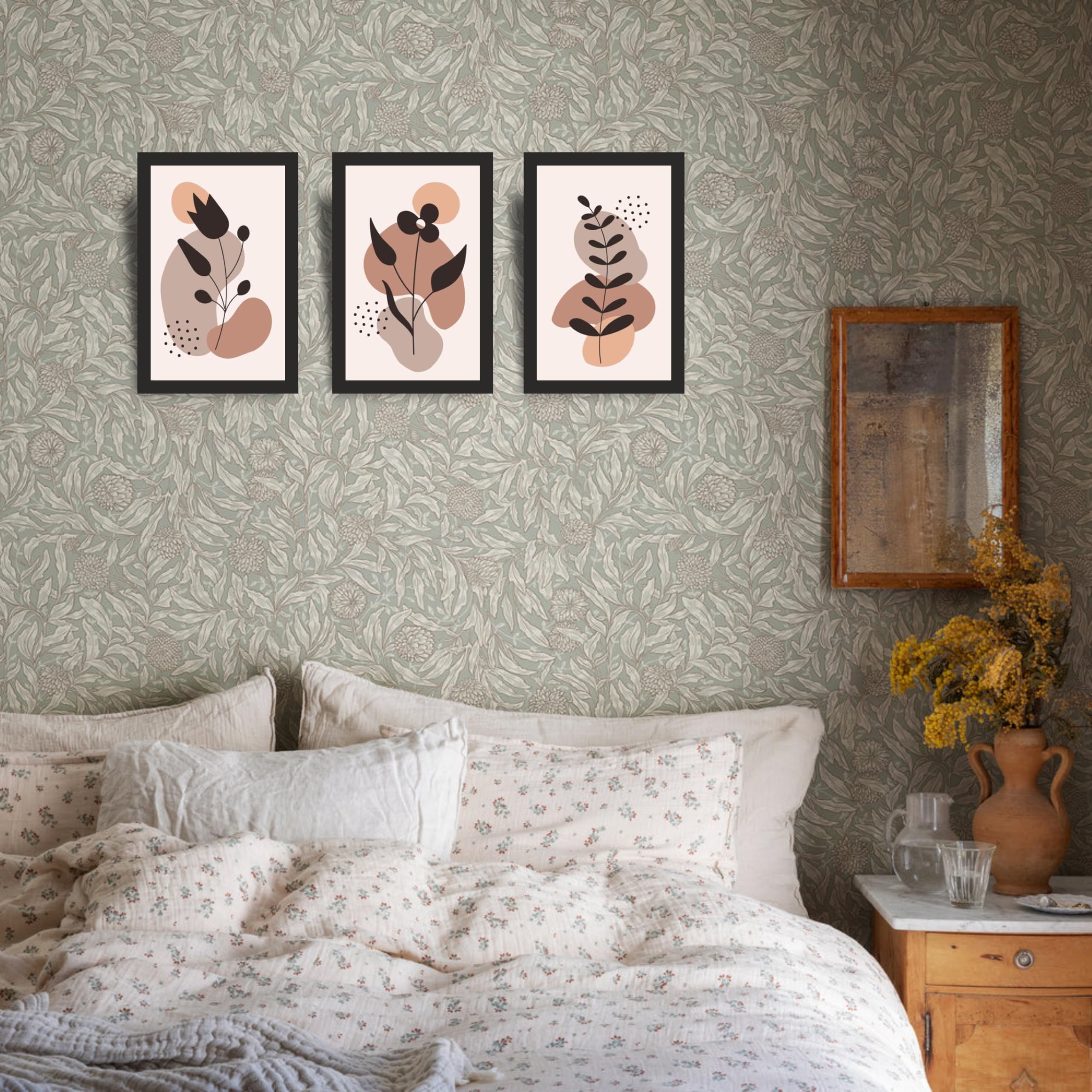
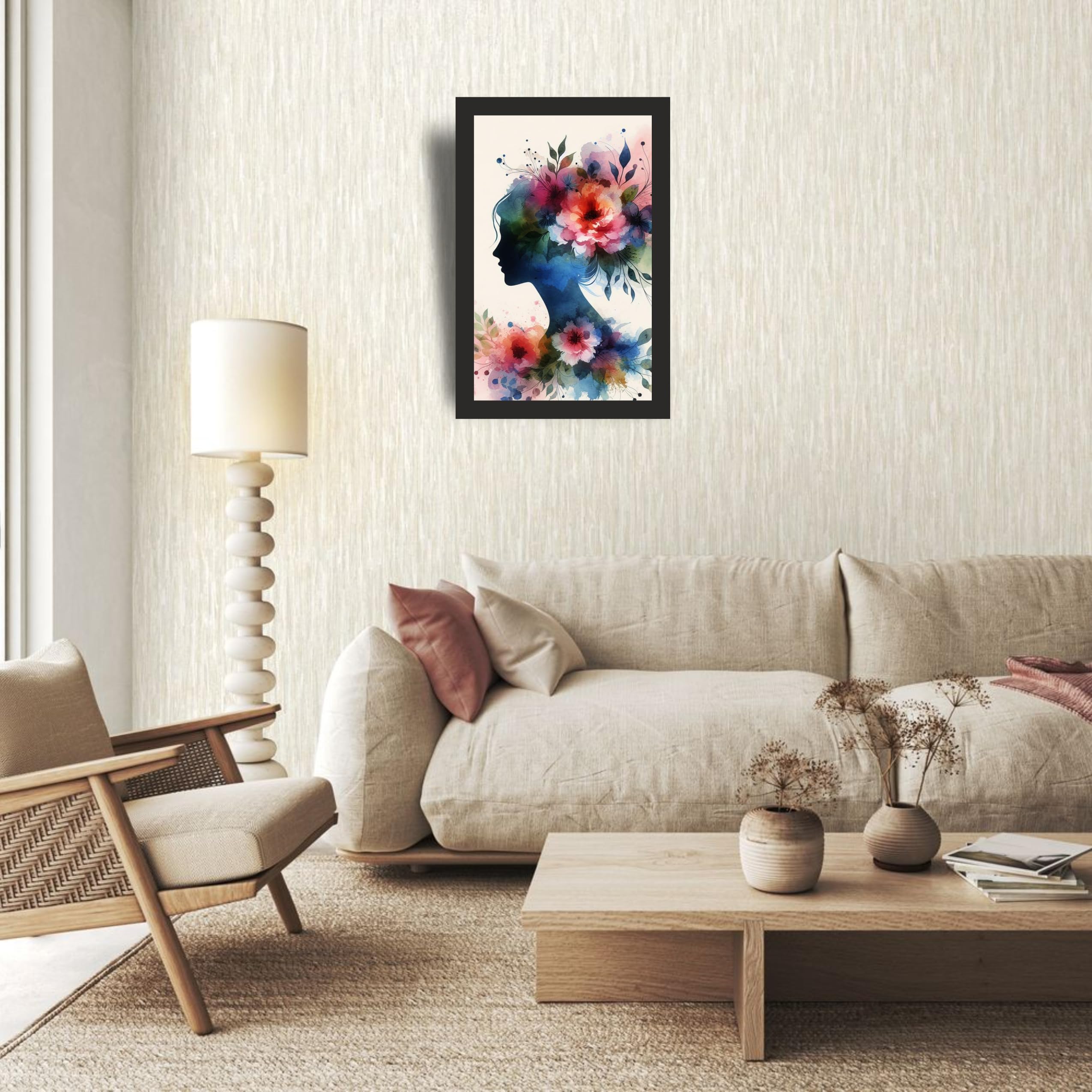
Festive wall art does not have to be devotional. Botanical line art, floral silhouettes, warm autumn landscapes and restrained abstracts can refresh a living room while remaining useful all year. These styles also provide a neutral option for households that celebrate culturally without displaying religious images in shared rooms.
A set of three creates rhythm over a sofa or sideboard. Keep spacing consistent—often a small hand-width is enough, depending on scale—and align the centres. A single floral frame can fill a narrow wall beside a dining area, while an abstract set can balance colourful textiles elsewhere in the room.
Browse existing Nature & Landscape Art and Abstract & Modern Art to compare palettes. These category links are for visual exploration, not a claim that every piece is specifically made for Diwali.
Layer lights, flowers and reusable details
Lights
Use warm strings to trace the outside of a grouping or frame the larger wall area. Avoid crossing wires over artwork and keep plugs accessible. Test the effect with other room lights dimmed so the display does not become overly bright.
Flowers and torans
Place garlands along a shelf, doorway or the outer edge of a backdrop. Use trays beneath fresh arrangements and leave space between damp stems and frames. Reusable fabric or paper torans can reduce annual waste.
Diyas
Keep open flames on stable, heat-resistant surfaces away from curtains, paper, frames and electrical wires. Reflective trays and mirrors can increase visual warmth without adding unsafe numbers of flames. Never leave diyas unattended.
Three wall plans for different homes
These plans are starting points rather than rules. Adjust them to the family's beliefs, the wall and the amount of movement through the room.
A compact apartment wall
Use one 9×12 or 12×18 frame, a short warm-light string and a narrow floral accent above a console. Keep the floor clear and let a small rangoli or diya tray supply the temporary festive layer.
A wide living-room wall
Choose a coordinated set of three or one large devotional work. Repeat colours from the art in cushions and flowers, then outline the full grouping with lights rather than wrapping each frame separately.
A mixed gallery wall
Give devotional art a clear position and balance it with botanical or abstract pieces of compatible scale. Use one frame finish and consistent gaps. Add only a few temporary accents so the gallery retains its visual order.
Artwork for a layered Diwali wall
The products below deliberately mix devotional, nature and abstract categories: compact Tridevi and Durga frames, colourful Ganesh wall art, a large Radha-Krishna piece, botanical and floral work, warm autumn scenery and a neutral abstract set. They demonstrate different wall roles rather than one prescribed arrangement. Each is an existing product with full details on its page.
Plan the wall for after Diwali
Before installing anything, imagine the wall without garlands and lights. The framed arrangement should still feel balanced. If it depends entirely on temporary décor, adjust the art spacing first. This approach reduces the empty feeling that can follow festival cleanup.
Store reusable elements by type and label light strings before packing. Photograph the final arrangement if you want to repeat it next year. Remove adhesives carefully and check frames for dust or moisture before leaving them in their year-round positions.
The same principle appears in our Ganesh Chaturthi decoration guide: begin with a lasting base, then layer the season around it. A considered wall can feel festive beyond the diyas because the artwork, scale and palette were chosen for the home itself.