
A Durga Maa photo frame can be a devotional focus, a connection to family tradition and a powerful visual presence in a home. Maa Durga is widely revered in Hindu traditions and is often associated with shakti, courage and the triumph of good over harmful forces. Different forms, stories and regional practices bring additional meanings to her imagery.
Those associations are symbolic and devotional; displaying a frame does not guarantee protection, health or success. For many devotees, the image offers a reminder of inner strength, compassion and faith. Choosing it well means respecting the household's practice while also considering wall size, visual style and daily use of the room.
This evergreen guide covers classic lion and tiger imagery, serene and watercolour treatments, practical placement in pooja and living areas, and gifting during Navratri, Durga Puja or a new-home celebration.
The meaning associated with Durga Maa imagery
Maa Durga is represented in multiple forms and is honoured through diverse traditions across India. Her many arms, weapons, mudras and lion or tiger vahana carry layers of symbolism interpreted through scripture, art and regional practice. Broadly, devotees often understand her as an expression of divine feminine power and the courage to confront injustice or disorder.
Navratri and Durga Puja bring these meanings into community celebration through worship, music, dance, food, art and gathering. A framed image at home may connect everyday space with those memories. Some families prefer a calm portrait for daily prayer; others value dynamic Mahishasura Mardini imagery or a traditional rider composition.
Avoid ranking one form as universally better or more powerful. The appropriate image is the one that aligns with the family's devotion and cultural background. If gifting, learn their preference rather than choosing solely from visual drama.
Choosing a visual style
Classic lion or tiger compositions
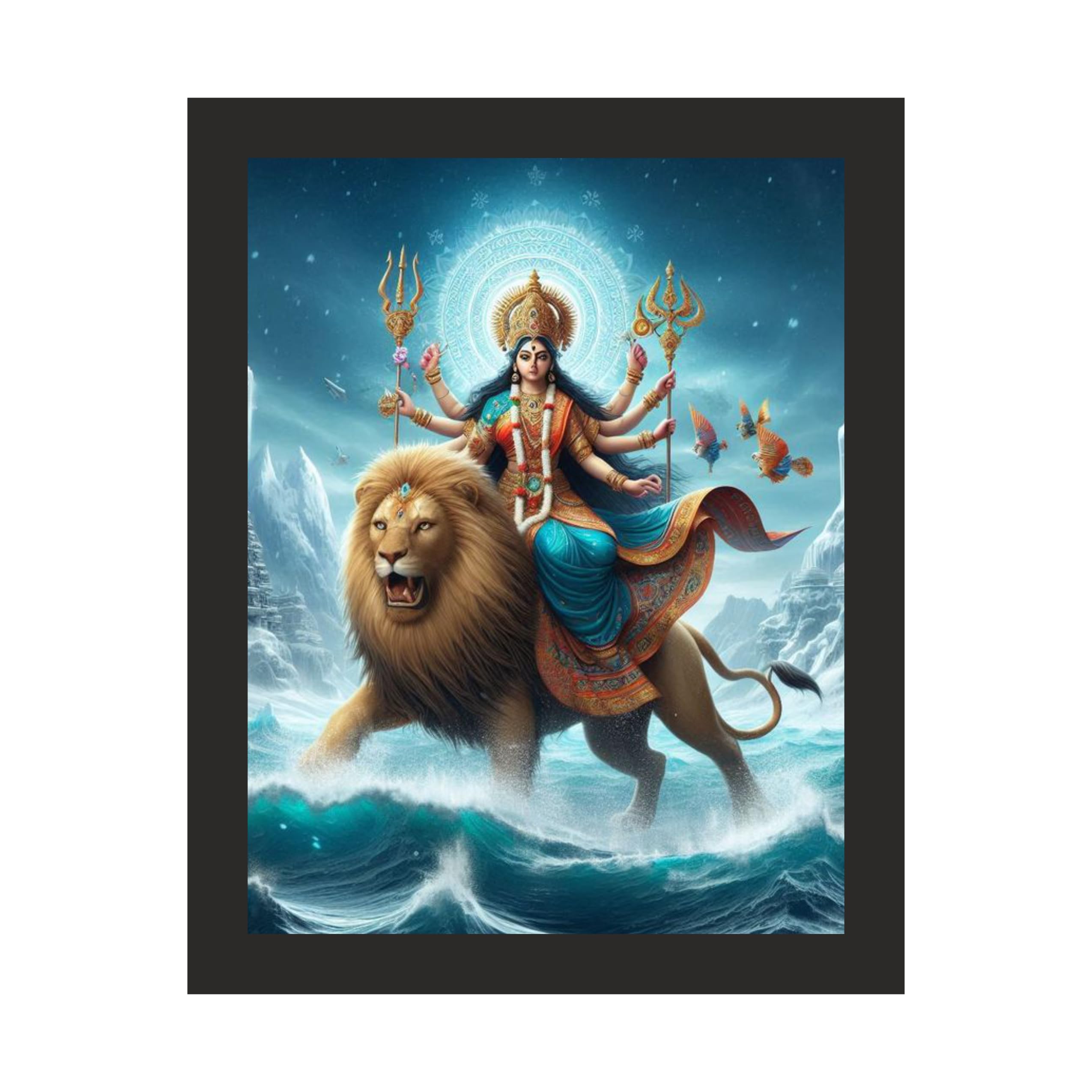
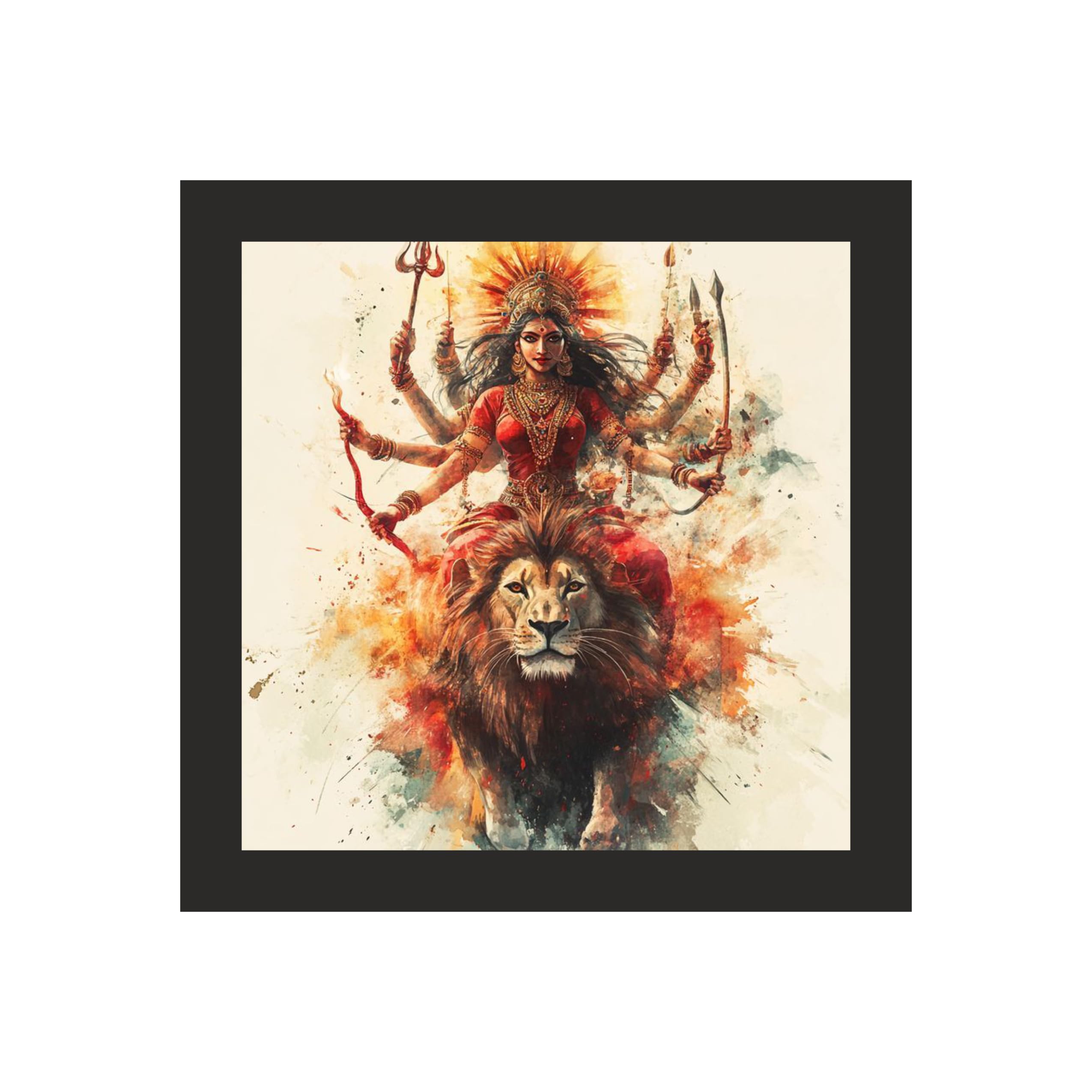
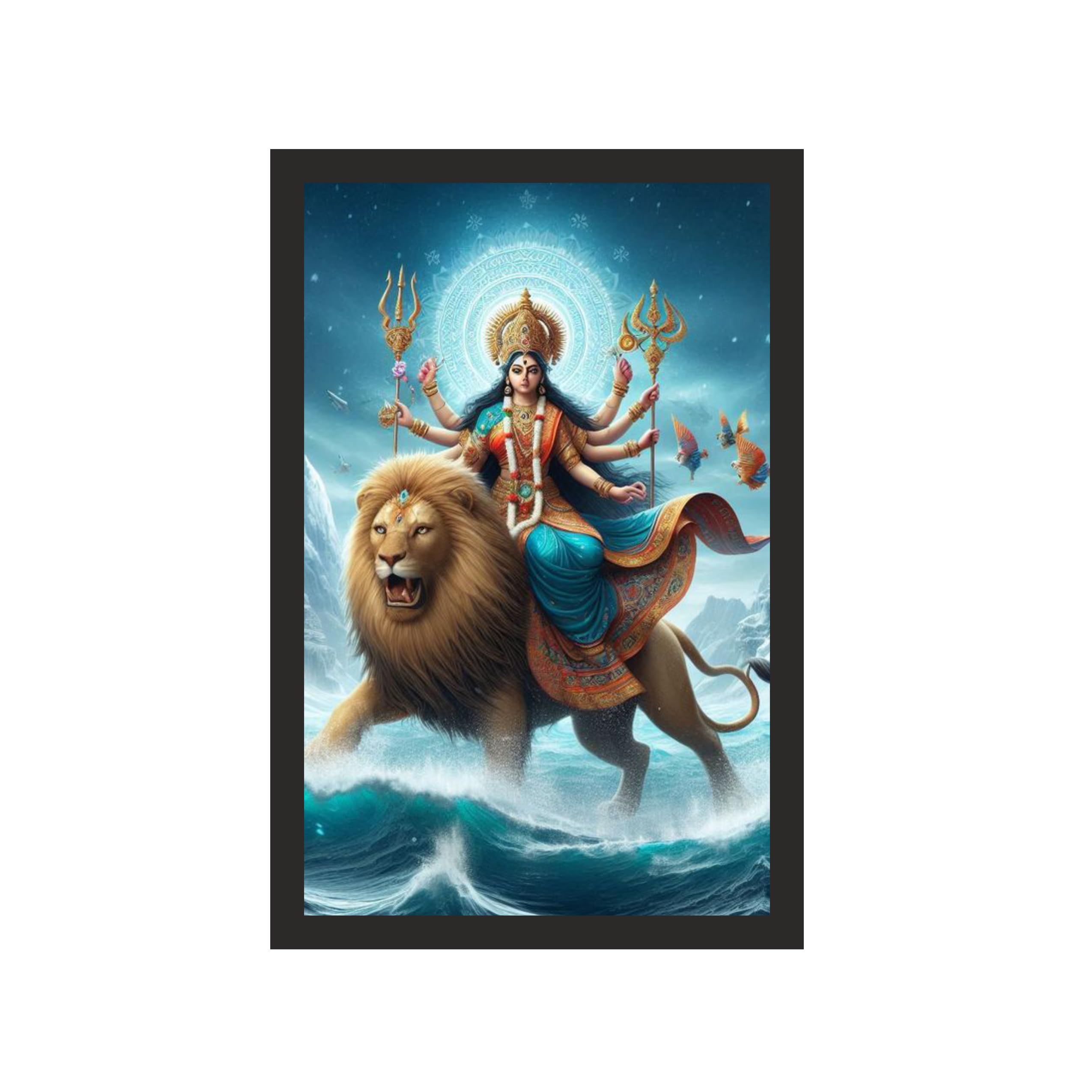
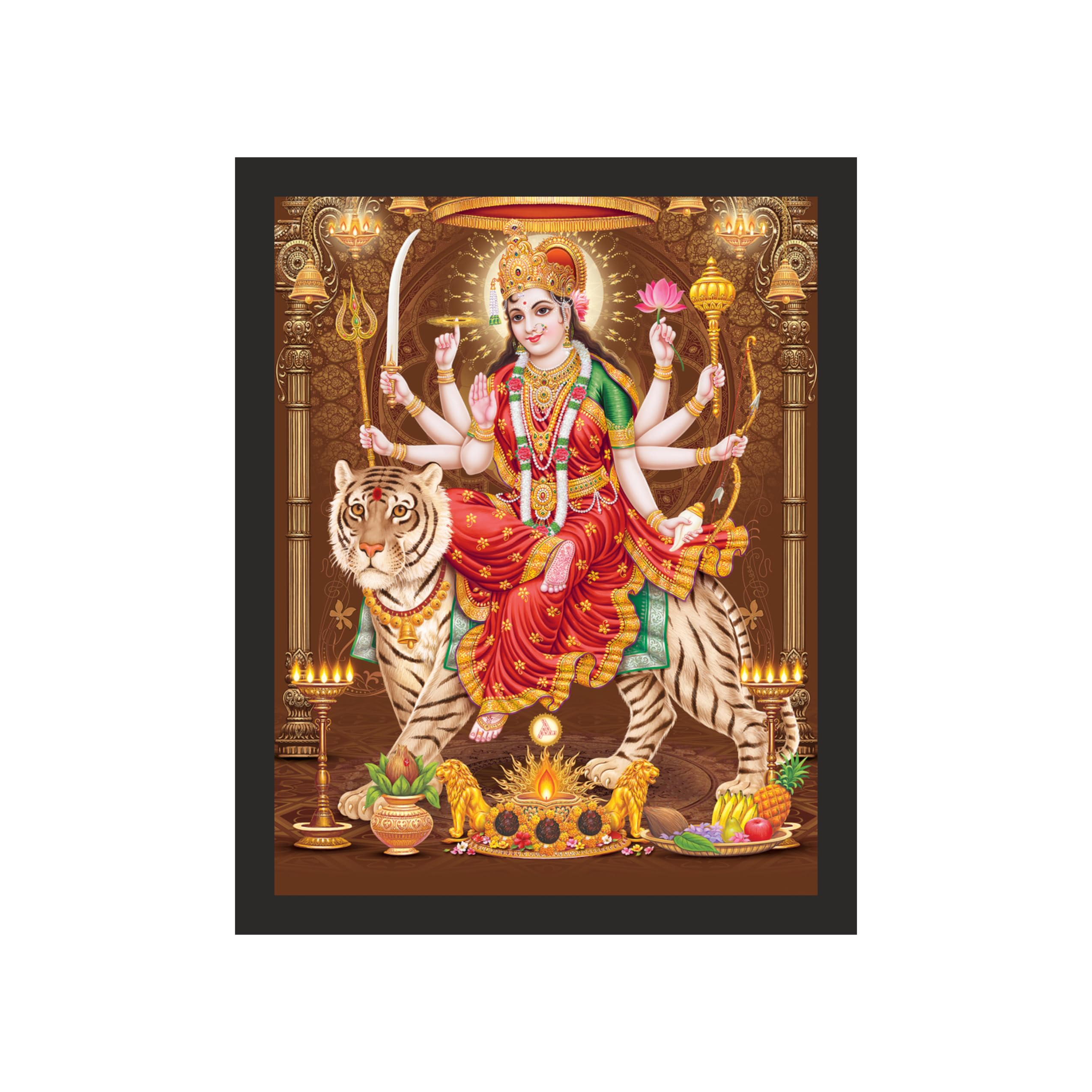
Traditional rider imagery creates a clear devotional statement and can suit pooja rooms or family living areas. Detailed colours and ornament work benefit from uncluttered wall space, even when the frame itself is compact.
Serene and mountain settings
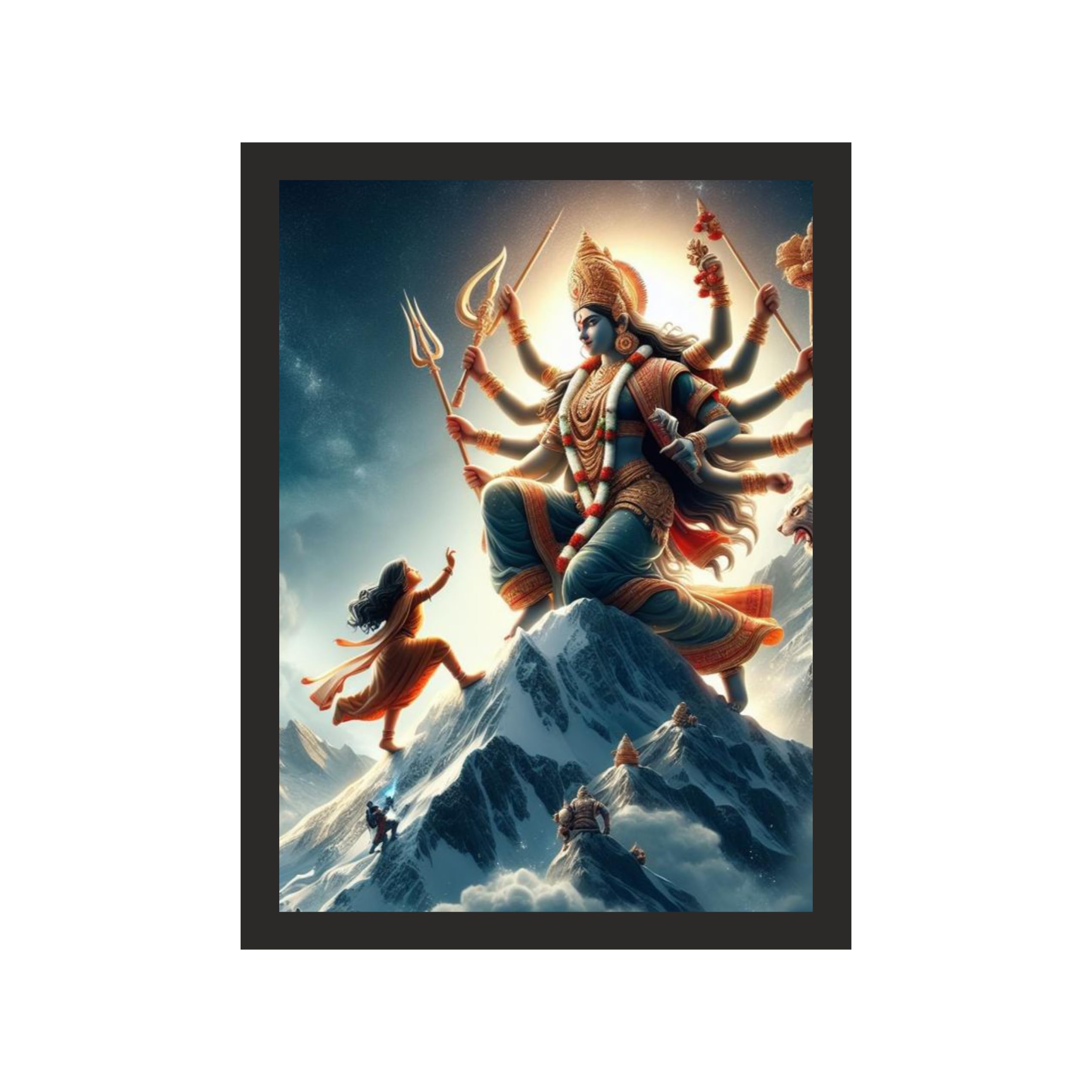
A tranquil expression or mountain backdrop can work in quiet prayer corners and homes that favour a softer palette. The visual emphasis remains devotional while feeling less intense than a battle scene.
Watercolour and contemporary art
Watercolour treatments and modern compositions can bridge devotional meaning with contemporary interiors. Check that important iconographic details remain clear and that the recipient appreciates the artistic interpretation.
Select the frame size for the room
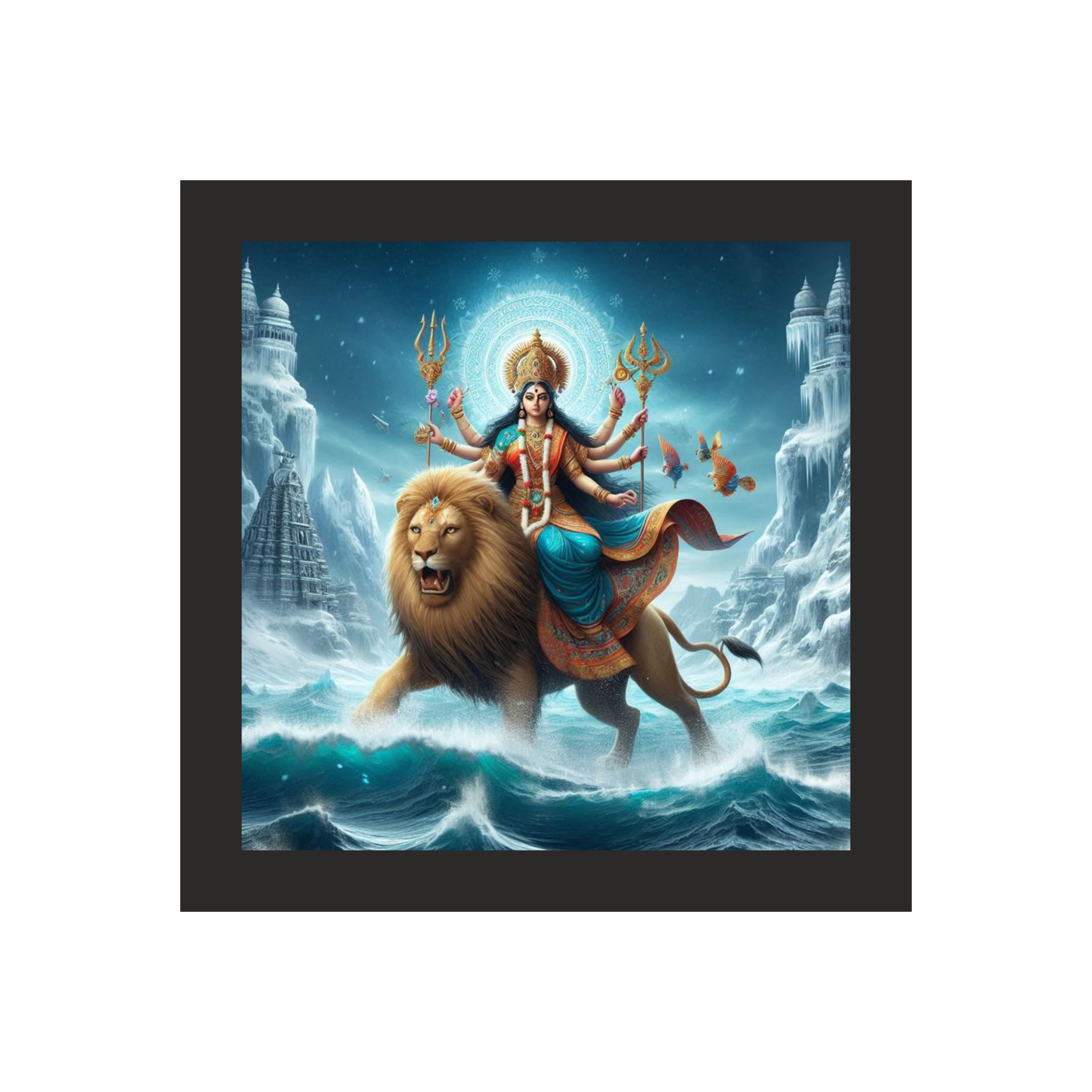
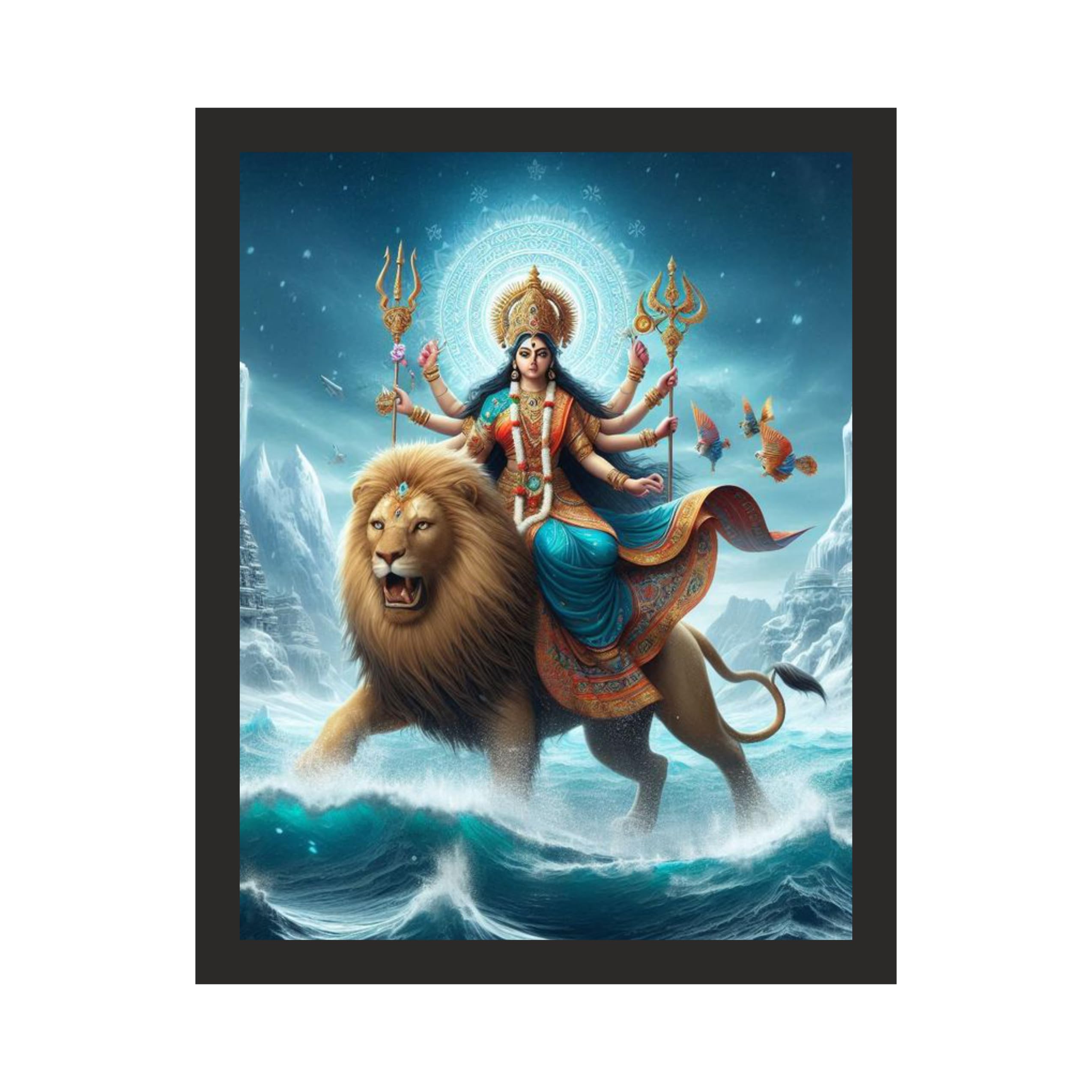
Compact 8×10 and 9×12 frames are flexible for a small mandir, shelf area or narrow wall. A 12×12 square frame provides balanced presence above a console or within a grouping. A 12×15 or 16×20 piece works as a stronger focal point in a medium room.
Large 24×36 Durga wall art requires open wall, secure mounting and comfortable viewing distance. It can anchor a living room or dedicated prayer space but may overwhelm a small apartment corner. Use painter's tape to mark the dimensions and assess the outline from the main seating area before choosing.
Consider orientation and surrounding objects. Portrait frames suit tall niches; square pieces work between balanced lamps or smaller images. Leave enough breathing room for the imagery and avoid hiding details behind flowers or furniture.
Placement in a pooja room, living room or entrance
Household and regional traditions differ, so placement guidance should not be presented as an absolute religious rule. Ask the person who maintains the home temple or follow established family practice. A gift recipient should always choose the final location themselves.
Practically, use a clean, stable wall away from moisture, direct harsh sunlight and open flame. In a pooja room, allow safe clearance around lamps and incense. In a living room, position the frame where the image can be seen without competing with a television or dense gallery wall. At an entrance, ensure the artwork is protected from weather and frequent contact.
The same principles of proportion and respect apply across devotional subjects. Our guide on Ganesh Ji imagery for the home offers related ideas while keeping each deity's traditions distinct.
Caring for devotional framed art
Dust the outer frame with a soft, dry cloth and avoid spraying cleaner directly onto the print or glazing. Keep the piece away from persistent moisture and strong sunlight that may affect the image over time. When using flowers nearby, place them in a stable container and remove wilted petals before they touch the frame.
If the artwork is moved for Navratri or Durga Puja, wrap it in clean, soft material and store it upright in a dry location. Check hooks and hanging wire before remounting. Care is practical rather than ceremonial, but it reflects the attention usually given to an image that has devotional significance for the household. Keep the original dimensions and product information with the wrapping so future installation decisions are easier, especially if the family changes homes.
Durga Maa wall art to explore
The Yaadscape products below range from compact guardian and mountain imagery to serene, watercolour, lion and tiger compositions in medium and large sizes. They provide a useful comparison of format and artistic tone. Each links to a real product page with full imagery and Amazon purchase details. Browse additional devotional pieces in Spiritual & Devotional Art.
Gifting a Mata Rani photo frame
A Durga Maa frame can be appropriate for Navratri, Durga Puja, a housewarming or a personal milestone when the recipient welcomes devotional art. For parents and close family, you may know whether they prefer classic or serene imagery. For friends or colleagues, ask before selecting a religious gift.
Choose a portable size when the recipient's wall is unknown. Add a note about courage, gratitude or shared celebration rather than promising protection or success. If attending a festival event, deliver the frame at a calm time and use secure packaging. The broader Navratri gift ideas guide includes non-art options when a frame is not the right choice.
For gifting later in the season, spiritual Diwali gift ideas compare Durga, Tridevi, Ganesh, Ram and Radha-Krishna artwork with useful household and food gifts.
Choose devotion and design together
A frame will remain in the home long after festival flowers and temporary décor are removed. Select an image the household will want to see daily, not merely one that appears dramatic in a product card. Scale it to the wall and make sure the visual style feels compatible with the room.
Most importantly, speak about Maa Durga with respect. Her imagery can symbolize courage, compassion and divine feminine strength for devotees, but the meaning cannot be reduced to a decorative promise. A thoughtful Durga Maa photo frame is one chosen with cultural awareness, practical measurement and genuine regard for the recipient.